Tuesday, 27 February 2024

The Price is Rite


This week's  Book of the Week on BBC Radio 4 is Ritual, by Dimitris Xygalatas, with the helpful subtitle "How Seemingly Senseless Acts Make Life Worth Living"

On Monday it described this:
This is not a transcript of the broadcast. My legendary typing skills of up to 10 wpm aren't up to that. It's taken from the book iself.
The 'flamboyant pink' gives a clue to  what is being described: flamingoes. But it's not just birds that participate in these strange and apparently unproductive rituals. Many animals  especially homo sapiens – do it too, as evidenced by this find:


It goes on to discuss the transition from a nomadic life to a settled life based on agriculture

<autobiographical-note>
This reminded me of a talk I heard a few years ago about  Neanderthals, in a Cambridge Alumni Festival. The speaker argued that they weren't the clumsy Untermenschen depicted, depreciated, and  generally underestimated in popular culture, but rather they were sensitive souls. Some of the evidence for this was the so-called "flower burial" discovered at a cave in Shanidar, in Kurdistan. The theory, based on 'clumps' {HD sic   – odd word] of pollen found near the skeletons, was that some kind of funerary rite involved the ritual placing of flowers near the carefully preserved bodies of the departed.

But this theory was disproved  by recent findings reported in a Guardian article last summer;

“Although the evidence was subsequently questioned, the story was spectacular enough that it is still found in most archaeology textbooks,” said Prof Chris Hunt at Liverpool John Moores University, who also credits it with inspiring him to pursue a career in environmental archaeology.

However, recent excavations next to where Solecki [HD – original proponent of the "flower burial" theory] discovered the Shanidar 4 remains are [sic] prompting a rethink of this hypothesis. 

The collections of pollen were indeed collections: Some bee-like insect (bees. perhaps?) had gathered pollen from a range of flowers that bloomed at different times of the year:

The team ... revisited the original pollen identifications, finding that the clumps contained pollen from more than one type of flower, with not all of these plants blooming at the same time of year, – [sic] throwing the idea of funeral flowers into doubt. Rather, the most likely source of the pollen clumps is nesting bees – evidence of which was discovered nearby, – [ahem] the team suggests.

<anachronism-alert>
(might there have been a Neanderthal Interflora, forcing unseasonal flowers especially for the funeral market? [Probably not.])
</anachronism-alert>

...The [HD  newly discovered] bodies appear to have been placed in a gully-like feature, through which water occasionally flowed, immediately adjacent to a huge rock. The relative depths of the bodies suggest that they were placed here at different times – possibly over a period of several tens to hundreds of years.

Shanidar 4 and Z [HD – don't ask me why  they switched naming conventions for the bodies] appear to have been placed in roughly the same position, as if they were looking out of the cave, and while the remains of the third Neanderthal are too sparse to be sure of its burial position its head similarly appears to be facing east.

“What is becoming very clear is that at least three times Neanderthals came and camped on the sediments beside this gully, and placed a body into it,” Hunt said.

“Although it is very difficult to infer traditions from archaeology, this looks like a tradition of disposing of the dead in a very similar way and it’s obviously with care, because two of the bodies are very complete.”

 </autobiographical-note>

Today (Tuesday) the book considered the function of ritual, and suggested it was a coping mechanism, more common in stressful and or demanding situations competitions, contests of any kind, wars... (it hadn't occurred to me [why would it?] that people entering a bomb shelter might be  found to favour one foot when; crossing the threshold; the right, I think the book said).

That's enough for today, but it's a fascinating book.


b


Tuesday, 20 February 2024

Not the East minster

 Last Saturday MrsK and I enjoyed a semi-private...

<parenthesis>
(only eighty-odd punters, but none of the great unwashed)
</parenthesis>

... tour of Westmnster Abbey, conducted by members of the Purcell Club (mostly old choristers from Westminster), punctuated by musical pieces (mostly choral, a capella – appropriately enough...

<etymological-note>
(see here for the reason, if you need an explanation [though, as with much else in the world of etymology, it's fairly self-explanatory when you think about it])
</etymological-note>

... – but including an organ piece played by the present organ scholar (neither an old-boy nor indeed a boy).

Passing through Dean's Yard I recalled a time in 1979 when  I went with a colleague at OUP (Rchard Brain [RIP] mentioned here), to a Greek Play (in classical Greek)  – a regular production at the time at Westminster School...
<parenthesis>
(maybe it still is, though I doubt it, given the lamentable treatment meted out to arts education – especially languages, and more especially classical languages –  by recent governments)
</parenthesis>
.... So it's quite possible, given that I was 28 at the time and the choristers on Saturday included some who would have been in their late teens at the time, that one or more of them had been in that production. I was too busy negotiating medieval staircases to do the necessary research though. Besides, as my O-level covered only two texts [only one of which was a drama] I followed very little of the play we saw, and don't even remember its title.
<autobiographical-note> 
The last time I mentioned Westminster Abbey was here on the occasion of the coronation of King Charles last year. A big fuss was made at the time about the use of the Augustine Gospels during the ceremony:

Precious Gospels from the Parker Library at Corpus Christi College, Cambridge requested by King Charles III for the Coronation.

The sixth-century Gospels of Augustine of Canterbury are the oldest surviving illustrated Latin Gospels in the world and the oldest non-archaeological artefact of any kind to have survived in England, continuously owned and in use for 1,400 years. The Gospels were shown to HM the King (then Prince of Wales) when he visited the Parker Library in March 2001. He immediately recognised their importance and has requested that they be carried in his Coronation procession on Saturday 6 May at Westminster Abbey.
...
The presence of the Augustine Gospels at the King's Coronation affirms their status as the most precious and important medieval manuscript to survive in England. Their fundamental significance to the nation was recognised when the Gospels were inscribed in 2023 on the UNESCO UK Memory of the World Register.

Shortly after the Coronation I sang with other alumni and the present chapel choir at Corpus, and visited the one-day exhibition:

Display board from the exhibition
Don't miss this rare opportunity to view the Augustine Gospels, part of UNESCO UK Memory of the World Register & processed at the Coronation of Charles III.

The Parker Library at Corpus Christi College is offering members of the public a unique opportunity to view the Gospels of St Augustine at the College Chapel on Monday 19 June 2023. The visiting hours are limited due to the fragility of the manuscript book. Free tickets are booked on a first come, first served basis. 


Ever since then (last June) I've been saving up a photo of one of the displays from that exhibition, and only now have I found an opportunity to use it. It's not particularly legible though. And  although I queued for half an hour behind people taking grainy/wobbly pictures of the Actual Thing, I was too cool to capture its soul; in fact I was quite surprised that the snappers were tolerated  at all – especially as there are professionally taken photos on the Parker Library website. And when I had just passed a Keep off the grass sign on the court outside the chapel where the book was displayed I was half-expecting a No photography one.
</autobiographical-note> 

I was interested to learn that Edward the Confessor, who completed a church fit for coronations in 1065...

<parenthesis>
(Edward himself was the last king to be crowned at Winchester. And every British  monarch since then was crowned at Westminster.)
</parenthesis>

...envisaged it as complementary to the East minster – St Paul's, which had been in use as a cathedral since the seventh century. And the Abbey's dedication to St Peter came as news to me.

Among the treasures we saw was the tomb of Edward the Confessor (off limits for the everyday punter):

St  Peter's (Westminster) [Ecclesia Sancti Petri] as it was at the time of Edward's funeral,
as depicted in the Bayeux Tapestry

<happenstance>
And the following day, reading The Adventure of English, I learmt that (according to the Bayeux Tapestry) Harold had his coronation in Westminster Abbey on the same day as Edward's funeral...

 <inline_ps>
I initially doubted my memory of this;  I wondered how a picture could be so specific about time (forgetting my own experience as a language teacher: "on the same day" is not particularly hard to portray). But the book is quite clear:

The tapestry shows Harold being crowned in Westminster Abbey on the very day that Edwards was laid to rest there. 
</inline_ps>

 – a trifle hasty, wouldn't you agree ? No wonder William was miffed.
</happenstance>

That's enough for now.

b

Update 2024.02.22.09.45  – Added <inline_ps/>


Monday, 5 February 2024

The North-EAST passage

Covid lockdowns did nothing for Putin's paranoia, or rather contributed greatly to it. A recent The Rest Is Politics (no link, because translation work has taken my eye off the ball for the last few weeks, so I can't point specifically to a particular edition – though I imagine it was influenced by articles such as this one in the New York Times [with the helpfully explicit title 

U.S. intelligence weighs Putin’s two years of extreme pandemic isolation as a factor in his wartime mind-set.

]...

<NYT-article>

...Throughout the pandemic, Mr. Putin has retreated into an intricate cocoon of social distancing — though he allowed life in Russia to essentially return to normal. The Federal Protective Service, Russia’s answer to the Secret Service, built a virus-free bubble around Mr. Putin that far outstrips the protective measures taken by many of his foreign counterparts.

Mr. Putin has been holding most of his meetings with government officials by video conference, often appearing in a spartan room in his Moscow estate, Novo-Ogaryovo. Even when foreign dignitaries arrived, they sometimes didn’t get to see Mr. Putin in person; the secretary general of the United Nations, António Guterres, had to make do with a video meeting when he visited Moscow last year....

Putin and his national security advisers,
  in a meeting days before the invasion

... 

</NYT-article> 

...)

Poor Vlad 'alone and palely loitering';  but he was in thrall not to la belle dame sans merci but to Mother Russia. He spent two years in timorous isolation, dreaming of going down in history as Vladimir the Great, leader of the Make Яussia Great Again movement.

<election-aside>
A recent BBC news reporter, looking forward to Putin's predicted and predictable landslide in the forthcoming 'election' said all Putin's opponents were either in exile or in prison; I think one group of possible opponents were missing from this analysis: the dead.
<election-aside>

Anyway, paranoia: to add to the geo-political realities, he found that Gaia herself was conspiring against him. This week's The Climate Question discussed the effects of global warming on Russia's coastline. Whereas hitherto that coastline has been protected from all but the most well-equipped of research vessels it is now, for 4-5 months of the year, open to all-comers. And Russia's response has been to miltarize much of a coastline that formerly had been protected by natural conditions; at,  presumably, great expense.

<parenthesis>
According to Rory Stewart, in that same podcast,   Russia's miltary spending is '40% of its budget'. I'm not sure what this means, and he didn't do his usual thing of quoting chapter and verse. But he was sure of the number: 'Four zero' (lest we should think it was a paltry 14%,  a mere 6 or 7 times the UK's).
</parenthesis>

Meanwhile, out at sea, Russia enjoys the paradoxical benefits of increased hydrocarbon exports  – made possible by the global warming caused by hydrocarbon exports already made along more expensive sea lanes: the North East Passage.

At the end of that edition of The Climate Question, another global warming paradox is introduced: the melting of the Arctic ice-sheet (and the Arctic is just ice – there isn't a continent underneath it, as in Antarctica) – has changed the Earth's gravitational field, with a counter-intuitive result: in the southern hemisphere global warming raises sea-levels. But in the north, with less ice exerting less of a pull on the water, the sea-level is falling. There's more to it than that, which was beyond my O-Level Physics with Chemistry (which I described elsewhere as the 'hasty...

<2024-afterthought>
I think 'perfunctory' would have been a better choice
</2024-afterthought>
... genuflection at the altar of Mammon that ... we Lotus Eaters were allowed to make on the way to a Greek class'); I recommend the last few minutes of  The Climate Question (in  this regard, I mean  – it's all worth a listen.)

That's all she wrote.

b

The War Against Error, Take 2


Not too much of note happened in the last week of November 2015. Infoplease defines it with its two termini : the downing of the Russian aircraft in Turkey on the 24th  and the beginning of the Climate Talks on the 30th (both of which may come to generate much of import in the future (the latter for good and the former for ill) – but in between  the world news cupboard was bare. So the Independent published a strange filler:

The 58 most commonly misused words and phrases

(58; not a solecism more, not a solecism FEWER, as Jeffrey Archer might have observed.)

The piece starts out promising to be a review of  Steven Pinker's The Sense of Style:
The book is like a modern version of Strunk and White's classic "The Elements of Style," but one based on linguistics and updated for the 21st century.
Hmm. I'm not convinced by this use of linguistics as if it were some kind of magic added ingredient – Now with added Linguistics, they say, much as the makers of Pedigree Chum used to say Enriched with nourishing marrow-bone jelly in the '60s (not sure why that illustration swam up from the mental depths). Writing a style guide using insights provided by a study of modern linguistics (not "based on linguistics" whatever that means) is a good idea. I don‘t think "like ...Strunk and White..., but ... based on linguistics" quite does justice to the idea.

But the last six words of this sentence (a paragraph later) let the cat out of the bag (revealing it to be a pig in a poke...? a mixed metaphor too far, perhaps):
We've highlighted the most common mistakes according to Pinker using examples directly from his book along with some of our own.
As a result, it's impossible to identify the source of some of the slips (many of which I suspect aren't Pinker's, although I detect in some of his preferences that linguistic conservatism common in countries with a history of British colonialism: Canada, USA, Australia, India...).
You might be shocked by how many words you've been very slightly misusing.
it warns in the sub-headline. Well, no and no. I first discussed such nostrums here. More recently I wrote this. But this topic seemed worth yet another visit.

There is, in this list, a clutch of the Usual Suspects disinterested/uninterested, hung/hanged...
<autobiographical_note>
which I can never read without hearing, in my mind's ear,  Rex Harrison's
By rights he should be taken out and hung

For the cold-blooded murder of the English tongue
in the soundtrack recording of My Fair Lady. Oh how we larfed.
</autobiographical_note>
... depreciate/deprecate, flaunt/flout, irregardless, practical/practicable, proscribe/prescribe, protagonist/proponent, unexceptional/unexceptionable, effect/affect (which I looked at a couple of years ago in a post entitled "Enother old favourite"}, lie/lay...   AHA
<eureka certainty="iffy">
Perhaps alphabetization/lack thereof in  the Independent's list is a clue to the provenance of different items: Pinker's are alphabetical and the Indy threw in a few at the end to make it up to a round ... hmm, not so much...58.
</eureka>
But there are odd omissions and strange choices, identifying a problem area but citing an uncommon  symptom credulous, for example, rather than credible whereas the chief solecism I've met is incredulous/incredible (which aren't mentioned). BNC finds 35 cases of credulous and 428 of credible but 171 of incredulous and 1174 of incredible. OK, a total of 1345 instances of incredulous/incredible don't imply that many instances of confusion, but they far outweigh those for credulous/credible (3:1)  that's three times more occasions of sin (as my RE teacher would have said).

The fatal inter/intern confusion

And has anyone ever used urban myth to refer to someone like Al Capone,  confused meretricious with meritorious, or used New Age to mean futuristic? Does anyone confuse averse/adverse, inter/intern...? Maybe they do in Canada.

Also, there are assertions of "mistakes" that aren't mistaken, as for example:
Cliché  is a noun and is not an adjective
OK, some people believe that; British English dictionaries assert it. But Merriam-Websters, for example, accepts it as either a noun or an adjective. I suspect the Indy's simple (and simplistic...
<linguistic_mechanism>
Incidentally, this is how these once-decried (first deprecated, then depreciated, and ultimately accepted as standard) confusions commonly bear fruit. Cases arise where either is acceptable; and the process grinds on. And not just with words; also with grammatical forms. Guy Deutscher, recounts in The Unfolding of Language how the 'going to' future arose from usages that referred to both travel and futurity:  'they are going to see him'. More of this in an update...
</linguistic_mechanism>
 ...) "A not B" does not reflect Pinker's careful academic aloofness. I suspect that the careful avoidance of etyma (who could define "meretricious" without referring to ladies of the night?) derives from Pinker's studious avoidance of the Etymological Fallacy discussed in several Harmless Drudgery posts. This "A not B" approach reflects that of the Reichenau Glossary, discussed hereVESPERTILIONES was right; CALVAS SORICES wrong. But, irregardless, a French bat is a chauve-souris. 

So I must read Pinker's book; surely the Indy's howler-ridden piece can't do justice to it?  Who knows what Santa may bring?

b

PS And here are a couple of clues:

Profoundly disappointing: baby's male – begone! (7)
Parental – sort of care before parturition. (8)

Update 2015.12.21.11.10  – Added afterthought in blue.

Update 2015.12.22.11.50  – Added picture; really must get an artist 

Update 2016.04.06.17.25  – Added answer to 2nd clue (still working on the first...anyone?) and removed footer.

PS PRENATAL

Update 2016.07.30.12.15  – A couple of typo fixes. I STILL can't get that first clue. 

Tuesday, 16 January 2024

Great Tits and American Chemists

This week's Nature Bang on Radio 4 caught my attention, particularly because the point de départ was a study involvimg Great Tits,  my single  conquest in the birdsong  recognition stakes...

<parenthesis>
(apart, of course from the easy and common Magpie and Jackdaw)
</parenthesis>

.... The Great Tit's monotonous...  

<afterthought>
(Strictly, more often than not duotonous, although sometimes it replaces the second tone with a hoarse gasp...)
</afterthought>
...call is not uncommon hereabouts; and it's easily recognizable.
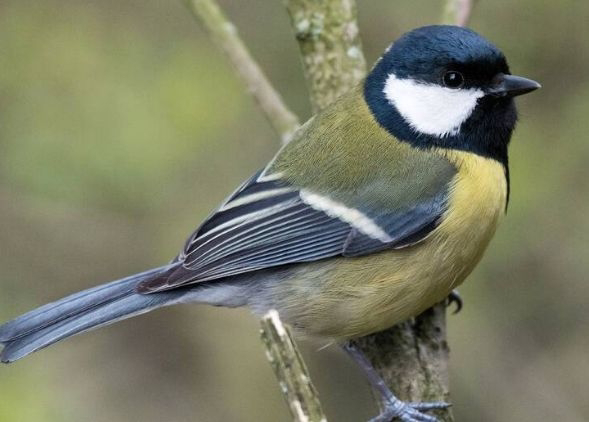
As is the bird

The study involved culture, and the influence of immigrants. It involved a puzzle (of course) and a number of micropopulations, each consisting of six birds. There was also a 'tutor bird', which had been trained to solve the puzzle the wrong way.

Left to themselves, the tits soon learnt the right way, and it entered their culture (incomers and new-borns picked it up). But when the tutor bird was introduced, the culture adopted the wrong way to solve the puzzle (there was still a solution, but not the most efficient one).

Then a couple of immigrants were introduced to the group, and the puzzle was solved more efficiently...

<observation summary="immigration 1, Farage 0">
(Conclusions about the costs/benefits of immigration are clear. I am reminded of Ruth Davidson's observation in this week's Today Podcast: she found it extraordinary that no political party, given the demographic facts of the UK's aging population and economic failure to thrive, was making the positive case for immigration. Nature Bang simply flagged this issue up as 'political'; flag-wise though, my colours are nailed to the mast: it's a no-brainer – the benefits of immigration vastly outweigh the costs.)
</observation>

... but the obvious conclusion ('immigrants introduce innovations') was found to be an over-simplification. It was not the incoming birds that introduced the innovation. The more experienced home-grown birds did that. But the wise old-timers, having found the right way, soon reverted to what they'd been trained to do. What the incomers did was recognize the improvement and – not feeling the weight of the dead hand of the misguided culture – adopt it as best practice. It then entered the culture, and was passed on to young birds

So it was with Great Tits. What about us? Nature Bang went on to consider  Jewish emigrés' influence on US organic chemistry.

<background>

  • Chemistry, because innovation is documented at the Patent Office. Not all innovations are patented, but in the world of Big Pharma  (for obvious financial reasons – innovations are either patented or not researched [so they don't happen in the first place]) they are. 
  • Organic, because in the 1930s US inorganic chemistry was world-leading, but not organic (the warm/wet/messy stuff that involves life).

 </background>

Jewish organic chemists fleeing the Nazis (having been stripped of their livelihoods, though not yet their lives) brought new techniques and insights into the USA. And patents in organic chemistry boomed. But the new patents were not registered by the immigrants themselves. Young American scientists developed the immigrants' ideas.

 There was lots more in that edition of Nature Bang. Give it a go.

b

Wednesday, 10 January 2024

Translation News

Work on my next translation (an entry for the John Dryden Translation Competition) has been accompanied by the Royal Mail delivery from Hell. It seemed promising enough on Monday: 'next day delivery before 1.00pm'. But 'next day', starting on Monday, should be Tuesday, and Royal Mail's final date gives the game away:


So what happened on Tuesday (apart from stalwart manning of the front door, obvs)?

The package was in 'Swindon MC' (whatever that is) and it stayed there long after the promised delivery time. Nearly 16 hours after arriving at 'Swindon MC' it was passed, just before midnight, to 'Swindon MC'. So Wednesday dawned. And on Wednesday many things happened at 'Reading DO' (which I imagine is a Distribution Office, though to judge by the TEN entries in the tracking log it might as well stand for Dithering and Obfuscation. Perhaps it was a software glitch (oh no, that's the Post Office).

But the package did arrive in the end. Lucky it wasn't urgent.


AOB

Before Christmas I wrote – rather hurriedly...
<path-not-trodden> 
(I originally planned to vary the refrain, but with looming deadlines – both The Times's and homelier ones – I just cutNpasted the 'honest mistake' bit) 
</path-not-trodden>

... – this: 


God rest ye merry, gentlemen of the HMRC 
Who calculate the way to raise the costs
of decency       
So we can hold our heads up in the world community        
Oh that's what it takes to be a Mensch
(Pardon my French)
Oh that's what it takes to be a Mensch .

But then Nadhim Zahawi got to be the taxman's boss
And found his business interests were set to make a loss
Unless he cooked the books a bit (whoever'd give a toss?)
 'It was only an ho-onest mistake
Honest mistake
It was only an ho-onest mistake.'

Then Rishi's post-Truss cabinet began to give him grief
Nadhim became a Minister without a working brief
No clash of int'rest possible, now that was a relief 
'It was only an ho-onest mistake
Honest mistake.
It was only an ho-onest mistake.'

In January Rishi made a show of being fair
And so Nadhim Zahawi was bumped down to party chair
He really couldn't  mess with things, no clash of int'rest -  there 
'It was only an ho-onest mistake
Honest mistake.'
Some may think that he was really on the take.

It would have taken up about a fifth of the space available in The Times Diary, so I'm not surprised it didn't lead to fame/fortune/national acclaim. But I'm my own gatekeeper...
<buzzword_du_jour>
(reference to a not-very-satisfying piece on the radio today, with a particularly lame ending)
<buzzword_du_jour>
... so you've got it – like it or not.,

Happy New Year.

b

Update 2024.01.29.15:00 – Added PS

PS
It's done and submitted. As usual, the entry form (specifically the requirements for the naming of files) left something to be despaired. 
<rantette>
(and no, that's not a typo). As someone who used to be paid to write instructions (and did Courses to prove it, with certificates and everything [which I forbore to stick on my wall] I find the attempts of the well-meaning academical committee charged with writing and rewriting the rules an annual trial).

After failing to make head or tail of some instructions, which led me to damage a newly-bought tool, I wrote (here)
They might as well ship these things  pre-broken  – it'd save a lot of bother.

Nothing broken this time though, if you don't count a few brain cells.

</rantette>

Saturday, 30 December 2023

Red-faced hunter

Crowd Science's end-of-year round-up led me to this 2017 article in The Conversation, which - among other things, recounts this astronomical symbolism from the aboriginal lore of Australia:

A Kokatha oral tradition from the Great Victoria Desert tells of Nyeeruna, a vain hunter who comprises the same stars, in the same orientation, as the Greek Orion.

He is in love with the Yugarilya sisters of the Pleiades, but they are timid and shy away from his advances. Their eldest sister, Kambugudha (the Hyades star cluster), protects her younger sisters.

Nyreeuna creates fire-magic in his right hand (Betelgeuse) to overpower Kambugudha, so he can reach the sisters. She counters this with her own fire magic in her left foot (Aldebaran), which she uses to kick dust into Nyreeuna’s face. This humiliates Nyreeuna and his fire-magic dissipates.

<idle-musing>
I wonder why both the Aborigines and the Greeks a few thousand years later decided that this constellation represented a hunter. No time for further research though.
</idle-musing>

The title of this paper rather gives the game away. 

Yes, Aboriginal Australians Can and Did Discover the Variability of Betelgeuse

<comment>
No prizes for the sequence of tenses, but it is only a preprint – not that that makes much difference...
<editorial-note>
In my experience as a technical writer (what I did didn't undergo  'peer-review' – in name, at least – but it was reviewed by my peers), peer review doesn't improve the writing; quite the reverse – it invites the influence of numerous mutually-exclusive grammatical bugbears. It may improve academic rigour, but it doesn't improve readability. 
</editorial-note>

... Come to think of it, hasn't it been peer-reviewed yet? 
</comment>

Recently, a widely publicized claim has been made that the Aboriginal Australians discovered the variability of the red star Betelgeuse in the modern Orion, plus the variability of two other prominent red stars: Aldebaran and Antares. This result has excited the usual healthy skepticism, with questions about whether any untrained peoples can discover the variability and whether such a discovery is likely to be placed into lore and transmitted for long periods of time. Here, I am offering an independent evaluation, based on broad experience with naked-eye sky viewing and astro-history. I find that it is easy for inexperienced observers to detect the variability of Betelgeuse over its range in brightness from V = 0.0 to V = 1.3, for example in noticing from season-to-season that the star varies from significantly brighter than Procyon to being greatly fainter than Procyon. Further, indigenous peoples in the Southern Hemisphere inevitably kept watch on the prominent red star, so it is inevitable that the variability of Betelgeuse was discovered many times over during the last 65 millennia. The processes of placing this discovery into a cultural context (in this case, put into morality stories) and the faithful transmission for many millennia is confidently known for the Aboriginal Australians in particular. So this shows that the whole claim for a changing Betelgeuse in the Aboriginal Australian lore is both plausible and likely. Given that the discovery and transmission is easily possible, the real proof is that the Aboriginal lore gives an unambiguous statement that these stars do indeed vary in brightness, as collected by many ethnographers over a century ago from many Aboriginal groups. So I strongly conclude that the Aboriginal Australians could and did discover the variability of Betelgeuse, Aldebaran, and Antares.

L'Envoi

Interesting pattern in the waxing and waning (see what he did there?) of interest in Harmless Drudgery, not boding well for January 2024😗:


Signing off for 2023.

b

Update: 2024.02.22.10.00
– Typo /format fixes.