Monday, 24 January 2022

Old Friends

I've reflected before about how a choir member knows he's getting on when concerts include works already sung (sometimes more than once). This time it's the entire programme:

  • Fauré: Requiem
    (third or fourth time, with my present and other choirs)
  • Bernstein: Chichester Psalms
    (so long ago that I was fit enough to cycle the dozen-or-so mile round trip for the concert-day rehearsal)
  • Vaughan Willims: Five Mystical Songs
    (last sung in 2011; our Past Concerts link also lists the 2020 concert which had to be cancelled

Fauré: Requiem

I posted here about an edition of Tales from the Stave, fortunately still available, and well worth a listen. As I wrote it more than 3½ years ago, I've cut/pasted most of it here; if you read it then (in which case thanks for the loyalty) you can skip the indented chunk that follows:
<pre_script>
One of the people commenting on the manuscript also featured as a boy soprano in the King's College Choir recording – Bob (credited at the time as "Robert") Chilcott. (In particular it alerted me to a mistranslation of mine, now fixed. To make matters worse, it was in a section that corrected a common mistranslation [of In Paradisum as *in paradise – which it doesn't mean]).
...In can mean many things  in Latin, but when followed by a noun in the accusative it doesn't mean 'in'. If the words were In Paradiso they would mean 'In Paradise'; but they are In Paradisum ... going on ...deducant Angeli : 'May angels will lead you into Paradise...' One of many other meanings of in, this time followed by the dative, is exemplified in the next phrase: in tuo adventu: that's closer to 'in' in meaning, with a sense something like 'on the occasion of'', though I'd favour a simpler translation: 'When you arrive...'.

More here
My mistake (future simple rather than subjunctive) was perhaps explained (though not of course justified – mea maxima culpa) by Fauré's own attitude to the Requiem as a lullaby of death. I let his view of death as a peaceful return to a state of eternal rest influence me. As Michael Lewanski‘s blog says
Unlike nearly all other works in the genre, it [HD: Fauré's Requiem ] contains none of the drama, anxiety, or fraught emotions one tends to associate with human thinking about death.  Nearly all references to the last judgement from the Catholic liturgy (and trust me, there are plenty) are excised. 
This nonchalance  in the sense of "not getting  hot under the collar" misled me into  assuming on the part of  Fauré a certain (not to say sanctimonious) belief that angels would lead the departed into paradise.

The manuscript, and thus the stuff of the discussion, was an unbound version without some movements added later (Offertorium, Libera me, etc.); it was, in the words of the Bibliothèque Nationale's Head of Music Manuscripts a manuscript de travail working copy rather than a draft of something to be  published.

Bob Chilcott makes frequent additions to the discussion based on his experience as a chorister;   from the sublime (David Willcocks‘s observation that the high strings after the triumphant Hosanna  represent  the angels flying off into the distance) to the ridiculous (after the recording of Pie Jesu, when the sound engineer asked if Chilcott wanted to listen back to his efforts, the response was "Sorry Sir, he's gone off with Marriner [Neville‘s  son Andrew] to buy sweets" [not the exact words – check Bob Chilcott's memory in the 17th minute of the programme]).

At one point (maybe more than one) Bob Chilcott calls attention to Fauré's word painting, which put me in mind of my own favourite example, discussed in an old post of mine:
My choice of 'listen out' [HD: the post was discussing phrasal verbs in  a context that had nothing to do with music] as an example is not entirely accidental. I'm singing this season Fauré's Requiem, which includes the prayer Exaudi orationem meam. This phrase is preceded by a soprano tune marked both piano and dolce: a very gentle and not-very-down-to-earth (in fact angelic)  'It is fitting that a hymn should be offered to you in Sion, O God'. Here the human penitent breaks in,  fortissimoExaudi – as if they were saying 'Enough of this airy-fairy stuff   "it is fitting that..."  my Aunt Fanny! This really matters to a human soul. Among all the millions of prayers addressed to you throughout Christendom – not to mention that bl**dy  'hymnus listen out for mine.' The rather limp translation 'Hear my prayer' doesn't do justice to the word.
And in the same post I returned to the theme of 'listen out':
<autobiographical_note>
At the funeral of a 
grande dame yesterday... I witnessed an underlining of the importance of this Ex-  [HD: in exaudi]. We were in the middle of one of those interminable call-and-response prayers, with the congregation saying ‘Lord, hear our prayer‘ again and again. And The Angelus butted in. (For the uninitiated:  The Angelus is a very noisy Call-to-prayer – much noisier than the Islamic version: ding ding ding <pauseding ding ding <pause> ding ding ding <pause...has it stopped?>  <oh dear me NO, suckersDING DING DING DING DING DING DING DING... [ad nauseam]).  And the congregation was bleating (that‘s one for the etymologists: grex = ‘flock‘) ‘Lord, hear our prayer‘. Here was the perfect opportunity for something more robust: ‘Listen out for my prayer‘.
 Not all believers would recognize this as a call to prayer exactly, but the name 'Angelus' is the first word of the prescribed prayer.                            
<inline_pps>
So it's a call to – and an accompaniment to – a particular prayer, to be prayed wherever the hearer happens to be, rather than [as in the Islamic case] a call to the faithful to come and pray at the mosque.
<inline_pps>
</autobiographical_note>
</pre_script>

Bernstein: Chichester Psalms

In July 2021 an edition of Radio 3's Building a Library dealt with the Chichester Psalms; the programme itself is no longer available, but there is this podcast – also well worth a listen (but be warned: the reviewer is a bit sniffy about the organ/harp reduction, which for obvious reasons is much the more common in local churches rather than professional concert halls: as he says, though, any version that brings this music to a wider audience can only be a good thing).

As Bernstein wrote at the time:
For hours on end I brooded and mused
On materia musica used and abused
Pieces for nattering, clucking sopranos
With squadrons of vibraphones, fleets of pianos,
Played with the forearms, the fists and the palms;
And then I came up with The Chichester Psalms.
These psalms are a simple and modest affair,
Tonal and tuneful and somewhat square:
Certain to sicken a stout John Cager
With its tonics and triads in Emajor.
But  while tonal and tuneful I certainly wouldn't call it square. In fact, when the Dean of Chichester suggested "Why do the nations..." as a possible text, writing that the setting could have "a hint of West Side Story", he can't have suspected that Bernstein would set that psalm – though not in full – using some unused material left previously unfinished from that very show: the Jets and the Sharks "furiously raging together".
<inline_ps>
And the word they break in with is lama – which, all unbeknownst, is one of the few words in Hebrew that most English people with a church education, will have met (though in a different context: Eli Eli Lama Sabachthani): why?
</inline_ps>
And at the end, in a conclusion strongly reminiscent of the last peaceful bars that accompany the informal funeral cortège at the end of West Side Story, Bernstein has all the voices coming together in unison on the word yahad (which means "together" – a typically brilliant piece of word-painting)

L'Envoi

I have nothing to say about the Vaughan Williams, certainly not enough to justify a Subhead (as for the Fauré and the Bernstein).  And mindful of Schönberg's advice to young conductors (discussed in this blog by our MD – "never be witty" – I shall resist the temptation to mention last week's rehearsal, when George Herbert's "I got me flowers" brought to mind Eliza Doolittle. (Except I didn't.)

But make a date for 19 March:


b
Update 2022.01.25.17:20 – Added <inline_ps>

Update 2022.03.21.12:55 – Added link to review, to give you a taste of what you missed.

Wednesday, 5 January 2022

The devil's interval - fifty years

Fifteen months ago,  I wrote here about something I had only just noticed:
<pre_script>
The idea for this  post has been bubbling away on the back-burner for some time, but something  struck me today – or more probably the day before yesterday by the time I hit Publish – that has brought it to the fore.  And "Something" is an appropriate choice of words, as it relates to the song Something's Coming at the beginning of West Side Story; specifically the introductory words, when Tony's still stacking bottles of pop ...
Could be,  
Who knows?
... before deciding to sing.  Each ...
<inline_pps>
Correction: only the second – I misremembered.
</inline_pps>
of these lines includes a tritone [HD 2022: three whole tones].... 
[And] In the later song Maria (and Maria transpires to be that something)  the same tritone is there, but spelt differently (it's a rising diminished fifth this time, rather than a falling  augmented fourth). Bernstein is telling the audience something, and it's only taken me sixty-odd years ...

<autobiographical_note>
The film (which the older of my brothers saw in the West End) premiered in 1961, but I heard the original Broadway cast recording in the late '50s.
</autobiographical_note>

...to notice it. I wrote "later song Maria", though Something‘s Coming was an afterthought (as explained here), so Bernstein knew de antemano as they say in Spanish...,

<tangent>
And there's another thing that I've no time to pursue: calques, or "loan translations". Which came first, de antemano or beforehandante = before, and mano = hand (where those "=" signs have a fairly loose sense of equivalence).
</tangent>

...what the "Something" was, and what it would lead to....
</pre_script>

And this is no accident. It's not  only in the introduction to "Something's Coming"; it's the first interval in the verse ("It's only just...") and the last interval in the song resolves it to a perfect fourth ("Something great is coming").

On television, some time in the festive miasma (just before Christmas, I think) I saw West Side Story - The Making of a Classic, which mentioned tritones and pointed out that they appeared all over the place in Bernstein's score – in the opening whistle (that's what the programme said, although it doesn't involve all three notes, just the 2nd and 3rd) and in "Cool": "Boy, boy..."

 "Pshaw!", I sneered to myself. "I spotted that years ago". But not so fast: the programme was a repeat, first aired on Boxing Day 2016 (well, the Feast of St Stephen, though like 26 December 2021 it was probably some nondescript Bank Holiday); and I may have seen it then (though if I had I would have expected to remember one of the presenters, Bruno Tonioli, who I associate with neither music nor the history of musical theatre (though maybe there are hidden depths there). So my "spotting" of tritones may not have been original (although, even so, the link between "Something's Coming" and "Maria" was).

The occasion for the re-showing of the Making of... programme was the fiftieth anniversary of the original film and the (hardly coincidental, I imagine) release of the Spielberg remake – which I saw at the weekend. 

<progress_indicator>
Aha... Llegando al grano, as they say in Spain (="Arriving at the grain", in other words "Getting to the point". 
</progress_indicator>

I had mixed feelings; the obvious first question is "Why? Why try to improve on a masterpiece?" That's an easy one: bums on seats; money.  And to have Pop's widow (a sprightly young Rita Moreno, at a mere 90) singing "Somewhere"? What would they do? Change the words? It's addressed by a lover to a lover.

The opening seemed to confirm my fears. The opening whistle, as I said, has a tritone ...

<parenthesis>
I wrote above "three whole tones" (unsurprisingly: we all know what tri- means). But I find it more helpful  to think of it as six semi-tones. The tritone is either an augmented fourth (a semi-tone more than a perfect fourth, e.g. F -B) or a diminished fifth (a semi-tone less than a perfect fifth, e.g. B-F).
</parenthesis>

...between the 2nd and 3rd notes; that is, according to Bernstein's score it has. But the whistler in the 2021 recording overshoots by more than a quarter-tone:

Prologue

So that the resulting note is nearer a perfect fifth than a diminished fifth; an imperfect fifth, perhaps. Given the importance of the tritone throughout the score (read my post and/or watch that Making of... programme for more details) it's surprising that Gustavo Dudamel (who, as conductor, might be expected to have exercised a bit of quality control) let it pass.

But things got better after that. The CGI available to Spielberg meant that the slum clearances were more credible, which supported a general stiffening up of what was in 1961, a fairly flimsy plot. And the reality of the racial tensions (supported by racially-sympathetic casting) was brought further to life in the a capella song sung by the Sharks when Lieutenant Schrank tells Bernardo to leave. He says vamo' to his followers, but his defiance is clear; in the words of their song, Despierta de ese sueño Qu'es tiempo de luchar.... Vamonos... (meaning, roughly, "Wake up; stop dreaming. It's time to fight.... Let's go...").

<inline_ps>
The soundtrack recording lists the Sharks' defiant a capella chant as La Borinqueñawhich surprised me at first for two reasons:

  • the lyrics include the word "Borinqueño" (helpfully glossed by Wikipedia in their English translation as "boricua")
  • the words were not – at first sight – those of La Borinqueña (the national anthem...

<hang_on query_term="national">
Well yes, it is, in certain contexts – the Olympics, for example: see this. for some background
</hang_on>

...of Puerto Rico). But in the end it all made sense: a Borinqueño is an inhabitant of Puerto Rico, and the word (with the -o ending) does figure in La Borinqueña. And the words sung by the Jets are not the namby-pamby "hello trees, hello clouds" politically correct words written by  Manuel Fernández Juncos and adopted in 1903 (which read like a particularly starry-eyed travel brochure):         
The land of Borinquén
where I was born
is a flowery garden
of magical beauty.
A constantly clear sky
serves as its canopy.
And placid lullabies are sung
by the waves at its feet.
...etc. Those "placid lullabies" are a far cry from 'Wake up; stop dreaming. It's time to fight". Those words are taken from  what were,  as Wikipedia says, the Original 1868 revolutionary lyrics (dating from a time when Fernández Juncos was still a babe in arms)

</inline_ps> 

The back-story is more credible too, especially Tony's as a once-violent nearly homicidal but now reformed ex-juvenile delinquent. And even "Somewhere" works, as the camera shows a photo of Valentina (Rita Moreno) and Pop on their wedding day; so that it becomes a statement of hope in a mixed-race marriage, and in a multi-racial society in general).

And Tony as a barely-competent deus ex machina ("I've fixed it. It'll only be  a fist-fight, one on one") was a bit hard to swallow in the original. Showing his abortive attempt at peace-making (and moving "Cool" to before the rumble) worked well (although bits of the original dialogue playing in the background [my mental background, that is] – "I wanna get even" etc. – were a bit distracting).

To balance the technical advantages that Spielberg had, he had to think about anachronisms (whereas fifty years ago that's just the way things were). There was plenty of the low-hanging fruit (like "daddyo" and "copacetic"); but one linguistic slip that stood out for me was in the scene where the Jets are getting tooled up for the rumble. One of the (unwilling, but... you know...OK if you twist my arm) adults uses the term "mutual assured destruction" –  a phrase not coined until 1962 (so at least a year after the original film was in the can, and several years after the Broadway show):

The term "mutual assured destruction", commonly abbreviated "MAD", was coined by Donald Brennan, a strategist working ... in 1962.
Source

Of course, a new word or phrase is often in the zeitgeist for a year or two before it's first recorded in print, but in a case like this I think Wikipedia is probably reliable: the term simply wasn't around until Brennan coined it "ironically, to argue that holding weapons capable of destroying society was irrational" (i.e. millions of people, not just a handful of punks).

Altogether, though, I thought the Spielberg version was enjoyable and worth seeing.

Meanwhile, back at the Real World, I have a translation to submit.


b

Update: 2022.01.07.12:50  – Added <inline_ps />

Thursday, 16 December 2021

'All you within this place'

Now to the Lord sing praises all you within this place
And if 'this place' is No. 10  each other now embrace...

A cheap shot, I know, but really though; what a shower. Boris could take lessons in leadership from Fred Karno.

I'm going to address omicron. But before you tune out with forebodings  of more bad news let me assure you that mine will be not a virological point of view; rather a linguistic one. The word has been mangled in all sorts of ways: I've heard omicrom, omnicron...

<parenthesis>
I've heard this latter at least twice on Newscast. The first time. the speaker was a Brit award-winner, and I raised a supercilious eyebrow...
<etymological_note>
(Incidentally, that's what supercilious means.)
</etymological_note>
...But the second was Dr Angelique Coetzee, discoverer of Omicron ...

 <meta_parenthesis>  
(originally dubbed nu [ν]  – in fact the 26 November edition of Newscast was the called The 'nu' variant.  But then someone realized that calling the old variant nu, after sigma is discovered [at some point in 2022, before they run out of Greek letters and have to adopt  the Only Connect method of using Egyptian hieroglyphs – I wonder who'll be first to catch the "Eye of Horus variant"...], might be confusing; they've also decided that xi [ξ] would be bad for relations with President Xi. 
</meta_parenthesis>

and darling of many a Tory ostrich. The slip occurs at 26'25" in this episode.  But I digress...

</parenthesis>

<autobiographical_note>
(and my Greek master had a talent for metathesis [see here for more about this sort of phoneme-swapping], so that he called this little o omricon; another of  his more common slips was referring to Mesopotamia as 'between the Tigris and the Euphatres')
</autobiographical_note>
....But a knowledge of etymology, as so often (except in Mr Towey's case...
<orthographical_note>
Another example is ancillary vs auxiliary. People who don't know the background aren't sure how many ls and how many is there are.

But an ancilla was a maidservant; (maybe there was a masculine, but ancilla is the only version I've met, inscribed on a ring unearthed (unashed) at Pompeii, and discussed here:
Ring found at Pompeii;
it is to be hoped that the wife of the dominus didn't find out.
<parenthesis>
(I was going to copy&paste the picture from that old post, but it's too heavily annotated there. Don't let me stop you from doing some background reading though; I think it's rather fun.)
</parenthesis>

And auxilium is help. So, armed with this information, you need never write anciliary again.
</orthographical_note>
...) should prevent this.  Ancient Greek had two sorts of o: o-mega and o-micron – 'big o' and 'little o': simples.

The little o, like any other god-fearing o, was tucked in between n and p (ν and π); (strictly speaking, ξ was there too; but let's not cause a diplomatic incident). But big o, o-mega, was in pride of place, right at the end of the alphabet. 
<silliness_warning>
I suppose the beginning would have been even more prestigious; but then it would be the omegabet
.</silliness_warning>
And 'the Alpha and Omega' is the bee's knees. In this early Christian word square...                                      
... the words tell the confused, arbitrary and multilingual story of sower. But the words weren't chosen at random. As this account says
The square reads the same up or down as well as forward or backward. However, the words do not collectively seem to mean anything. Individually, sator means "the sower", tenet "holdeth", opera "the works", rotas "the wheels [accusative case]". Arepo is not a Latin word; it is perhaps related to a Celtic root meaning "plough", an interpretation known in XIV Century Byzantium

...(though how a medieval Byzantine word found it's way to 1st century Rome beats me: a miracle , perhaps.) 

The same account observes that the letters in the square can be organized like this

A                P                O
 A
T
E
R
P A T E R N O S T E R
O
S
T
E
    O                R                A    

with the left-overs put in the corners. (as I said before in a post whose graphics have gone the way of much seven-year old html)

(My use of the term left-overs shouldn't be read as implying anything dismissive: 'I am the Alpha and Omega' has biblical resonance. Those letters even find their way into the Christmas Carol Unto Us is Born a Son

'O and A and A and O' 

Cum cantibus in coro...

And during the preparations for Easter Midnight Mass [in the Roman Catholic rite, of course{!}] the celebrant prepares the Paschal Candle with chips of incense [I think – I never got that close] inserted into the wax in the form of those two letters [repeated in the 'quadrants' defined by a crucifix]. Those two letters, repeated round about a crucifix, are by no means random 'left-overs'.)

 Duty calls.

b

Thursday, 9 December 2021

How much did the beloved worms cost you?

Silly me though: not le vermi but l'avermi. The words of a carol I'm singing on Saturday...

<plug>

</plug>


... are Quanto te costó l'avermi amato (=What did it cost you to love me?)

We'll also be singing, amongst other things, Ding dong merrily on high, which I pondered about here (on the occasion of our second-most-recent carol service, 3 years ago):

<pre_script>
The first thing that strikes me is its structure – which is pretty neat. The first verse is about something happening in Heaven. The second verse draws a conclusion (E'en so) about what should, as a result, happen down here: let steeple bells be swungen. And the third verse goes into specifics, specifying what should happen at Prime...

<brickbat_dodging>
I know, I know, this isn't a majority view. Still, it's what I think: Pray you Prime is a command about singing a particular office. An early editor, and ignoramus – a benighted heathen no doubt, who was not conversant with the format <utterance_word>+<office_name>, as in  for example "say Mass" – stuck a meaning-wrenching comma after you, making prime a ([n] improbable, it seems to me) verb. 
<inline_PPS> 
It just occurred to me that "chime Matins" fits the same pattern (although "chime" makes the format <utterance_word>+<office_name> a little over-specific [suggesting speech rather than just noise-making].)
</inline_PPS>
</brickbat_dodging>
... and at Matins; and then at the evetime song. In between. the praising etc. goes on, presumably.

But why sing io? There are people who sing /ɑɪ.əʊ/ (which led my correspondent [HD 2021: who had invited this speculation] to suspect a connection with Io). But the Oxford Book of Carols is insistent (to the extent of a footnote) that the pronunciation is "ee-oh"  (they don't trust readers with IPA symbols, but they must mean /i:.əʊ/).

Some years ago this question was raised in this forum,  As usual, comments should be weighed in the balance and some will be found wanting;  but they are fairly brief and not very numerous. There are many, often conflicting views:  
  1. "i-o" is a corruption of the Latin "in excelsis Deo"
  2. I-o is a contraction or corruption of "ideo," Latin for "therefore." The implied thought is "ideo... gloria in excelsis deo,".
  3. "io" is a Latin interjection (usually an exclamation of joy)
I imagine the truth is a mixture of the last two. (The first sounds to me like the distinctive blend of fanatically Christian sanctimoniousness and inventive improbability so familiar to survivors of a God-fearing education.) But monks in a scriptorium fought off RSI by abbreviating anything they could; and the pre-existing Latin interjection gave them an off-the-shelf solution.
</pre_script>

We'll also be singing a new arrangement (by our MD) of  The Seven Joys of Mary, which I wrote about (5 years ago) here:

<pre_script>
We will be singing several pieces new to the choir, among them Joys Seven – which is, in jazz terms, a paraphrase of The Lincolnshire poacher.

<digression>
That's something they don't seem  to do in  Primary Schools any more  – communal singing of  what were known as "Folk Songs" before the Revival of  the late '50s–early '60s.. I remember at St Gregory's RC Primary School singing with gusto
When me and my companions were
    setting of a snare

'Twas then we spied a gamekeeper
For him we did not care
For we can wrestle and fight,
    me boys,

And jump o'er anywhere...
A one-time colleague of mine, who already played the piano and the violin, during her teacher-training was required to learn the guitar so that she could maintain eye-contact with her pupils. As a consequence of this sort of thinking, today's schoolchildren can sing Kumbaya but not Sweet Lass of Richmond Hill.
</digression>

The interjection "me boys" in that extract are significant in a mistake I am always tempted to make in Joys Seven, because the two-word interjection at the equivalent place is "good man" – and I find it hard to avoid the less devout version.
.
.

And while we're on the subject of the words to Joys Seven, the sixth verse (which needs a rhyme for six) evokes in me another conditioned reflex from my old  St Gregory's days, provoked by the words "To see her own son Jesus Christ upon the crucifix".

A cross is a cross; an image of someone on one (there have been thousands of people tortured to death that way, if not  millions, but Christ is usually the one depicted) is a crucifix. I thought I'd better confirm this bit of pedantry, and it seems that dictionaries tend to agree:

Cambridge

Macmillan

Cobuild

Still, they needed a rhyme for six, and there aren't too many. Besides, the Collins English Dictonary is more forgiving:
</pre_script>

Words though (as I regularly say before a concert); they won't learn themselves. 

Do come!


b

Monday, 22 November 2021

Putin on the fritz


The recent gabfest at Glasgow has occasioned a number of "cop"-based puns (a cornuCOPia [bou-boum-tsh-I-thangyou]), but chief among them good cop (Paris) bad cop (Copenhagen). But for some reason I haven't heard the rather world-weary "not much cop". 

There has been a welter of podcasts, that I am slowly working through, and in one of the many (I've no idea which) there was an interview with a  poacher turned ga... actually, logger turned conservationist in Brazil. As is often the case with non-English-speaking interviews, there was a split second of foreign language answer before a translation cut in.

He (the reformed logger) was talking about a reform that was going to come "really quite soon" (that's my translation). What he said was logo-logo which struck me for two reasons:
  • a silly pun, based on the very approximate equivalence of logo and "logger"
  • the fact that the programme's translation made do with a simple "soon"
This is reminiscent of a case I mentioned a few years ago, here, with reference to the French finalement finalement:
<quote_and_thoughts> 
"The woman being interviewed was recounting a separation caused by war, but, thanks to some agency, 'Finalement, finalement' she was reunited with her family. The translator said 'Finally, finally', which just about did the job, but it sounded a bit off – not exactly a FAUX ami, but one whom your mother wouldn't invite for tea.

'Finalement finalement' reminded me of Jaques Brel's Chanson des Vieux Amants:
Finalement, finalement
Il nous fallut bien du talent
Pour être vieux sans être adultes
And the vieux amants had been together, off-and-on, for a good few years."
So the repeating of the adverb of time adds to the emotional impact of the event it modifies. I'm not suggesting that there's some kind of linguistic universal here; I just have the feeling that these two Romance languages (French and Portuguese) behave similarly in this respect – that when you repeat an adverb of time you mean more than just (e.g.) "finally" or "soon".
<quote_and_thoughts>

I wouldn't pretend to be an expert on Brazilian Portuguese, but I suspect that the translation of logo-logo as just "soon" leaves something to be desired.

But what's this got to do with Putin?

In 2003, commenting on Russia's refusal to ratify the Kyoto Protocol (obliging developed and developing countries to reduce greenhouse gas emissions to 1990 levels), Russian President Vladimir Putin jokingly remarked that global warming is not so bad for a northern country like Russia, since “We could spend less on fur coats, and the grain harvest would increase,” but a year later, he signed the law on ratification of the Kyoto Protocol .
Source [That's a Russian-language site, but there's an English button.]

So he did finally sign the Kyoto Protocol, and by 2009 the writing was well and truly on the wall (though it may have been a bit hard to read, given the state of the wall):

Detail from 2009 photo, Guardian 2016

Cracking and collapsing structures are a growing problem in cities like Norilsk – a nickel-producing centre of 177,000 people located 180 miles above the Arctic Circle – as climate change thaws the perennially frozen soil and increases precipitation. Valery Tereshkov, deputy head of the emergencies ministry in the Krasnoyarsk region, wrote in an article this year that almost 60% of all buildings in Norilsk have been deformed as a result of climate change shrinking the permafrost zone. Local engineers said more than 100 residential buildings, or one-tenth of the housing fund, have been vacated here due to damage from thawing permafrost.
Source

In the run-up to COP a Moscow Times article chronicled Putin's switchback ride:

Skepticism to Acceptance: How Putin's Views on Climate Change Evolved Over the Years

During his two decades in power, Putin has gone from joking about the climate crisis to gradually accepting responsibility for responding to climate change as its effects have become more pronounced in Russia, the world’s fourth-largest greenhouse gas emitter which is warming faster than the rest of the planet. 

"Accepting responsibility" to a limited extent. He sent a delegation to Glasgow, but he didn't face the music in person. Poor Vladimir. The most powerful pychopath in the world has his work cut out. As someone once said Uneasy lies the head that wears the throne (or something like that).

b


Wednesday, 10 November 2021

Knight-Commander of the Honourable Institute for the National Good


In view of the recent Sunday Times report, which quoted an ex-party chairman saying

The truth is the entire political establishment knows this happens and they do nothing about it… The most telling line is, once you pay your £3m, you get your peerage."
and in the spirit of one Lord Fisher, commonly cited (wrongly  and/or trivially, I would argue)...

<prescript intro="And here's why">
...As I write I have the BBC‘s Julius Caesar in the background; and the line Who is it in the press that calls on me leapt out at me with its two anachronistic puns: press and call on. And this reminded me of a recurrent annoyance, apparently irrelevant but similarly depending on an anachronistic pun sadly repeated ever and anon (is that Shakespeare?) by people who should know better: the roots of OMG:

This one’s for all you amateur internet archaeologists out there: The first recorded use of the ubiquitous texting abbreviation OMG wasn’t uttered by a precocious tween in the 1990s, but by one Lord Fisher in a letter to none other than Winston Churchill.
          Time report

Well well; silly us! There‘s everyone thinking that abbreviation's a child of the late 20th Century. How wrong we were! Umm,  no. Lord Fisher‘s "OMG" was a joke based on the names of honours such as "OBE" and "CMG". Here's the context:


To cite it as the etymological basis of the SMS-based abbreviation "OMG" is to indulge in an anachronistic pun – the sort of textual "discovery" that is increasingly common in these days of easily accessed electronic text  databases. In the words of that prescient ophthalmologist Friar Lawrence [HD 2021: in Romeo and Juliet]
What a pair of spectacles is this?
Old post
<HD_2021_Addendum>
Lord Fisher's is not "The first recorded use of the ubiquitous texting abbreviation OMG"; it's the first recorded use of those initials in that order, with a not dissimilar approximate meaning, but in a totally different context and a totally different intention. You might just as well argue that Shakespeare was a hi-tech whizz-kid because he coined the word "unfriend".
<HD_2021_Addendum>
</prescript>
...as the "source" for the abbreviation OMG, I would like to suggest the introduction of a new honour, Knight-Commander of the Honourable Institute for the National Good,  specifically for Tory donors: that's a bit of a mouthful, so you may want to abbreviate it in some way.  KCHING, perhaps.
 

Noticed in passing 

In the first episode of the BBC TV drama Show Trial, the spoilt brat at the centre of the story wiles (sic)...
<and_heres_why>
See this (the footnote in the red note). "Whiles" isn't wrong, but my omission of the h is both deliberate (I've thought about it) and intentional (I mean it).
</and_heres_why>

... her time in custody by singing a French nursery rhyme (which is curiously appropriate in a macabre way – possibly intentionally or possibly accidentally (the actor having been told to sing something to herself, foreign if possible, to underline her insouciance and sophistication). We'll see.

What makes it macabre is that it relates the story of a little sailor-boy who on his maiden voyage (un petit navire qui n'avait ja- ja- jamais navigué) is ship-wrecked. He and his fellows take to the life-boat, and  here's where it gets really dark.  After s few weeks the victuals start to run out...

<autobiographical_note>
This line (Les vivres vin- vin- vinrent à manquer) was my first exposure to the passé historique (in a hideously irregular form  – which my teacher at the time was wise enough to gloss over); what stuck with me was the expression tirer à la courte paille (which the little sailor boy does, of course ("draws the short straw")
</autobiographical_note>

... and they decide to draw lots to see who would be the first one to be eaten.

There are four things that make this story appropriate (five, if you include the fact that it's a French nursery rhyme –  with all that that implies about the culture and education of the singer):

  • Its watery background, echoing the place where (spoiler alert  –   whoops, too late) the body is found
  • Its matter-of-factness, underlining the nonchalance of the suspect
  • The fact that it deals with death, with a hint of greater or lesser illegality
  • The fact that the death is of a young innocent
So well done, or Chapeau!, to either the writer or the actress.
<INLINE_PS/>
After seeing the final episode it's clear that it was intentional on the part of the writer: the song and the singing formed a crucial part of the back-story (no spoilers though :-) )
</INLINE_PS/>

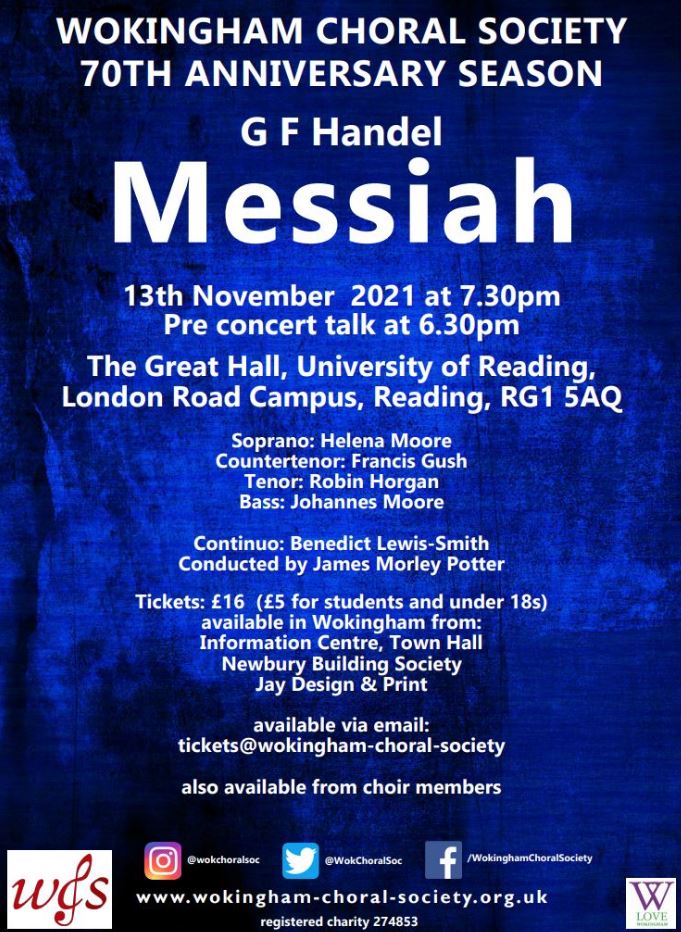
But I must get on, preparing for my first live concert in nearly two years:

No tickets on the door, and only 160-odd to buy in advance (Covid restrictions). So get them while they're hot (I've got a spare –  first come, first served!)

<INLINE_PS/>
And here's a review:


</INLINE_PS/>

b

Update: 2021.11.29.17:00 – Added <INLINE_PS/>s


Tuesday, 2 November 2021

Arms and the man

At the weekend I attended my daughter's post-nuptial shindig (the nuptials themselves having taken place a year ago at Reading Town Hall, with a cast of 6 including the bride and groom) at a quirkily decorated pub. May she and her Unworthy Swain (a title I originally coined for my little sister's husband, but now pass down to my son-in-law – "something borrowed",   perhaps – have a long and fruitful life together.

And now, the coincidence. First, a bit of background: early in the twentieth century (if not earlier – Wikipedia  says ...

As London developed, the area became predominantly market gardens which required a greater proportion of workers as it was more labour-intensive. In the 1850s, with improved travel (the Great Western Railway and two branches of the Grand Union Canal), villages began to grow into towns and merged into unbroken residential areas. At this time Ealing began to be called the "Queen of the Suburbs".

...) the name Queen of the Suburbs  became current,  and Nikolaus Pevsner repeated this accolade in his 1951 Middlesex volume in his  "The buildings of England" series – coinciding with the year of my birth...

<inline_ps>
(and also, as it happens with the inauguration of my choir, which is celebrating its 70th anniversary in the current season)
</inline_ps>
....I can't pretend that this gave me a predilection for the sobriquet, as I only noticed this coincidence today, but I have long been known to use the expression when referring to my native...

<autobiographical_note>
(not quite native; we moved there in 1953, for  reasons explained here. My little sister was a native, and it was the family home for about twenty years.)
</autobiographical_note>

...town. In fact, at a college reunion party I was once greeted as "Knowles, King of the Queen of the Suburbs".

Ealing's 1902 coat of arms
And for much of its twentieth-century life Ealing had this coat of arms:

(Stay with me; there's a point to all this, honest.)

In the mid-sixties, however, the burghers of Ealing had to get rid of the Middlesex reference (the three swords), and (no doubt at some expense, silly burghers) they changed the motto as well – getting rid of that so-last-year Latin stuff ...

<parenthesis type="supposed design comments">
(Respice? ["Look back"] Where's that at?  Besides, doesn't it suggest "Load up again with turmeric"?)
<parenthesis>
...but kept the pro- of prospice ["Look forward"]: "Progress with Unity"; pretty inspiring, don't you think.

Home-lit (ie not lit) photo of the shield


At last, the point: 

On the wall of the main reception room there was this coat of arms (with the motto Respiciens Prospiciens – the same two verbs ("Look back" and "Look forward"), but in the present participle (or "ing- form" as I learnt to call it during my CELTA training) rather than the imperative. I wondered if there could be a link between Ealing and  the original owners of these arms, whoever they may have been


They were awarded to the poet Tennyson when he was ennobled. The Tennyson family home was Farringford House, which stayed in the family until 1945, when it was acquired by an hotel chain. They presumably kept the escutcheon as part of their hotel décor:  
Farringford is a Grade 1 Listed Building and was the main residence of the Poet Laureate Alfred, Lord Tennyson from 1853 until his death in 1892. It continued in the possession of the Tennyson family until 1945, when it was sold to British Holiday Estates Ltd, who converted the house into a hotel. 
Source
Here's where The Bell (est. 2011) comes in. That Farringford House history continues:
Farringford remained a hotel until 2010, when work began to restore the building to its original condition as a historic home.

It's a fairly safe bet that  the newly-refurbishing pub took advantage of the sale (including the shield, mentioned in the 2008 ARCHITECTURAL AUDIT (INTERNAL)):

In the west wall, there is a fireplace with ornate wooden surround [80]. A wide, built-up moulded mantle-piece is supported by five main corbels containing human and lion faces in relief above a moulded leaf. ... The cast iron fireplace has two tall, thin decorated side panels, while along the top are seven quatrefoils containing a rosette motif except for the centre one, which holds a shield with Tennyson’s embossed initials, ALT. 

The photo I took wasn't well enough lit for a really  meticulous/pathological? search for these initials, though in the interests of academic rigour it seems to me that such a search is worth doing (in an arguable sense of worth).

Enough standing and staring though; there are leaves to be swept up.

b


Update 201211104.11:20 – Added <inline_ps />