Saturday, 2 May 2020

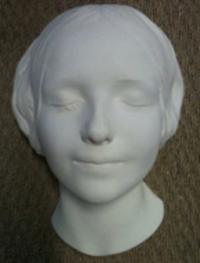
Annie - Mona Lisa of the Seine


The slimmed down Covid-19 version of Radio 4Extra's RadioLab programme (itself a repeat of the original NPR broadcast from the USA) brought to my attention a programme originally broadcast (in the UK) 2 years ago.
<autobiographical_note>
In the mid 1980s, when I was getting my First Aid at Work certificate, we were told that the first thing to do on approaching an unconscious casualty was to call out, as the sense of hearing is the last bit of consciousness to go (I'm not sure about this; maybe some other sense is the very last to go; but an apparently unconscious patient can still hear). So we always addressed the dummy as "Annie", which I assumed was based on the name of the dummy, Resusci-Anne.
</autobiographical_note>

But that RadioLab programme (the relevant section starts about 7'25" in) made me think again about the derivation of that "Anne". The English /æ/ phoneme used in "Anne" is  not a million miles from the first syllable of the French "Inconnue", and the similarity increases in the context of the following nasal. It told...
...the story of an innocent young woman from the country who comes to Paris, who's seduced by a rich lover and then abandoned when she falls pregnant. With nobody to turn to, she drowns herself in the waters of the Seine, a modern Ophelia. At the mortuary, her beautiful face, now peaceful in death, is preserved forever with a plaster cast. 
It was another drowning - or near-drowning - that ensured the Inconnue a place in medical history. 
In 1955 Asmund Laerdal saved the life of his young son, Tore, grabbing the boy's lifeless body from the water just in time and clearing his airways. Laerdal at that time was a successful Norwegian toy manufacturer, specialising in making children's dolls and model cars from the new generation of soft plastics. When he was approached to make a training aid for the newly-invented technique of CPR - cardiopulmonary resuscitation, the combination of chest compressions and the kiss of life which can save the life of a patient whose heart has stopped - his son's brush with death a few years earlier made him very receptive.  
He developed a torso or whole-body mannequin which simulates an unconscious patient requiring CPR. Asmund wanted his mannequin to have a natural appearance. He also felt that a female doll would seem less threatening to trainees... 
Source

In Norwegian, the similarity ...
<inline_ps>
between the Norwegian equivalent of  "Anne" and the first syllable of the French Inconnue
</inline_ps>
...may be closer. A fuller treatment than RadioLab's was given in a BBC Magazine article in 2013 (already quoted from above, and given the intriguing headline The Mona Lisa of the Seine;)
Millions of people around the world have learned CPR on a mannequin known as Resusci Anne. The story of the 19th Century beauty behind the model - or at least, one version of it - will be told at a symposium in London to mark European Restart a Heart Day. But does anyone really know anything about her?  
...[!I]f you're one of the 300 million people who's been trained in CPR, you've almost certainly had your lips pressed to the Inconnue's.

5 years later ( or maybe a bit more in the case of the original US broadcast) that figure hadn't changed;...
<old-numbers>
The mask of Inconnue
L'inconnue de la Seine
As CPR has been taught for nearly 70 years, that 2013 figure might have been expected to increase by at least a few hundred thousand since then. The "300 million people who'[ve] been trained in CPR" seems to be a rather sticky one. But still; what matters (to my understanding at least) is that they've all used a version of the same dummy, and that the dummy's based on a death-mask.
</old-numbers>
... but anyway it's a large number.

Bye for now. I'll leave you with a chance Where've-I-heard-that-before? noticed on my daily walk the other day; the radio played the Polka from Smetana's Bartered Bride  and I couldn't help comparing it with that staple of Belfast pub songs I'll Tell My Ma. Not identical by any means but close enough to remind me of the old Clancy Brothers/Tommy Makem version. (I didn't use this in the first sentence of this para. The introduction is a bit wordy. Skip to 0'9" if you just want to hear the music.)
<thinks>
Perhaps I shouldn't always be wired for sound – give the birdsong a chance. This morning they were making such a din that I almost missed the rare passage of an aeroplane.
</thinks>

b

Update 2020.05.06.13:00 – Added inline PS.


Saturday, 25 April 2020

From spine-tingling to nerve-jangling

The starting point for today's jaunt...
<note_to_self>
Must check on the etymology of jaunt. Looks a bit Indian to me. like jamboree and jodhpurs and juggernaut.
<cut_to_chase>
Couldn't help myself. 'Unknown origin' says Etymonline. But the trip to that source wasn't entirely wasted, as it's added to my stock of words that have done a somersault and reversed their meaning (as, for example, has backlog, discussed here (and elsewhere, from time to time: you know the drill).

There's not a lot on Etymonline to justify this switch in polarity; well. nothing really:
1670s in modern sense of "short pleasure trip," earlier "tiresome journey" (1590s), from jaunt (v.)
</cut_to_chase>
  <note_to_self>
 ...is a virtual choir recording in which I have a paternal interest. I'm not a fan of most web content (as they say) – most of it a mixture over-sentimentalized verbiage and meretricious clickbait – but this really does live up to its billing as both "spine-tingling" (though the headline wasn't that concerned about hyphenation) and "spellbinding" (a word that recalls to me that Bennet madrigal discussed in an update to this: "music the time beguileth").

In 2016 this Tallis piece displaced Spem in Alium – (House Song of the Van Helsings [no, that's Allium, 'Hope in Garlic'] {This is getting very silly}) – as my favourite (by that composer), as my choir prepared for the tour mentioned, tangentially (you know the drill), here.

On our first night in Newcastle a bunch of us ate at a restaurant on Grey Street, where I noticed this plaque (not a blue plaque, I noticed, perhaps for some reason: Black for foreigners that nobody's heard of? Or maybe it's more subtle than that: grey to match the street.


José Maria de Eça de Queirós black plaque | Open Plaques

Well I had (heard of him), and read a good deal of his oeuvre (or obra as we say in the trade).
<autobiographical-note>
and earlier this year (2020, keep up) I entered  a translation of some of his work for 

THE JOHN DRYDEN
TRANSLATION COMPETITION 
(Excuse the shouty typeface; I cut/pasted it from the entry form.). As well as being a novelist and a diplomat he was also a journalist, and a posthumous publication in 1905 assembled much of his work as Cartas de Inglaterra. He was a sort of fore-runner of Alistair Cooke, writing "Letters from England". 
I was first introduced to his work at a summer school at the Universidade de Coimbra, where they had a proprietorial interest in him as an old boy more than a century earlier.
<aside>
The lecturer had a quaint way with pronunciation, joining together two vowels with a... No.  TMI. Vivid memory though.
</aside>
</autobiographical-note> 
Returning to Tallis, I also sang the piece as a visiting Old Member at my Cambridge College in May 2018.
<autobiographical-note>
We visitors were each flanked by members of the present Corpus Christi Chapel Choir, who had mostly been raised as trebles in cathedral schools. So they had a trained reflex to raise a hand when they (rarely)  made a mistake. If I had done the same I would have given myself RSI.
</autobiographical-note>
And more recently we sang it at the WCS choral workshop back when the only place in Corona lockdown was Wuhan; and the (sadly few) basses made such a mess of our E'en the spirit of truth entries that it was not so much "spine-tingling" as nerve-jangling.

But I have secateurs to wield
And sheds to fix before I shield...

<apropos enemy="covid19", first-casualty="language" >
Which reminds me: I'm finding it hard to say 'I'm shielding' (which is the magic word for people especially at risk).  The health chappies (Witty et al.) are obviously not conversant with the Sapir-Whorf hypothesis – which sprang partly from Benjamin Whorf's experience working with insurance claims. He recognized that the way people described situations often contributed to misfortunes; for example, the phrase "empty petrol cans" encouraged people to underestimate their flammability, as "empty" can mean null or void or having no effect – as in "empty threat" "empty promise" and so on. 

Similarly (at last, the point) the verb shield implies strength. A (hero) shields B (vulnerable person) from C (danger). So saying 'I'm shielding' invites the belief that I'm strong. So when I was recently ordering some pills online I asked for them to be delivered to my home address rather than asking MrsK  to queue outside the pharmacy (which I gather we're saying now instead of chemist – I'm tempted to do the full Shakespeare and say apothecary). But I didn't want to say "I'm shielding" in case someone who spoke English misinterpreted it. (On the international stage I reckon this might be more of a problem. People exposed daily to Wittygrams know all about this (ab)usage; but not Johnny Foreigner.)

Just saying. People planning resistance campaigns of all kinds need to think about the language they're using.
</apropos>
...And sheds to fix before I shield. 

That's all for now

b

Update:2021.01.1610.55 – Added PS

PS
You see? Thin end of the wedge. The syntax of the verb 'to shield' was threatened by covid, and now the door's open for further abuse. Emily Maitlis, on yesterday's Americast, used the expression "He was shielding" to mean "He was sheltering" – with no hint of a virological meaning.

PPS
Come to think of it, the verb 'shelter' has precisely the kind of transitive/intransitive flexibility that 'shield' is beginning to have. 

Friday, 17 April 2020

And then two come along at once

My mind had spent 68 years untroubled by thoughts of Steller's sea cow. But for Christmas 2019 I was given a copy of Ross Barnett's The Missing Lynx, which introduced me to this loyal and gargantuan extinct manatee. It was rendered extinct, wrote Barnett, because it was so easy to hunt (which is where the loyalty came in – the silly things went back to help fellows who'd been harpooned).
Steller's sea cows were large herbivores that had a seal-like appearance with a tail which resembled that of a whale. The Steller's sea cow was named after George Steller who discovered the animal and who described it: "The animal never comes out on shore, but always lives in the water. Its skin is black and thick, like the bark of an old oak, its head in proportion to the body is small, it has no teeth, but only two flat white bones one above, the other below". 
Source
But then I heard Rob Newman, on The Extinction Tapes. He made it clear that (on this rare occasion) it wasn't only man that was vile. Well, vile, but not because of a direct effect on the sea cow population. The vileness was due to the popularity of sea otter fur, as explained in this article in the Proceedings of the National Academy of Sciences of the USA. It's not a simple story, but in a nutshell the hunting of sea otters for their fur, left sea urchins unchecked – and the sea urchins deprived the sea cows of their main (perhaps sole) source of food, kelp. It was not that  they ate an enormous amount, but they cast the plants adrift by gnawing through their moorings. As the National Ocean Service website says:
Sea urchins will often completely remove kelp plants by eating through their holdfasts. Other invertebrates found in kelp forests are sea stars, anemones, crabs, and jellyfish... 
A wide range of marine mammals inhabit kelp forests for protection and food. Sea lions and seals feed on the fish that live in kelp forests. Grey whales have also been observed in kelp forests, most likely using the forest as a safe haven from the predatory killer whale. The grey whale will eat the abundant invertebrates and crustaceans in kelp forests. One of the most important mammals in a kelp forest is the sea otter, who takes refuge from sharks and storms in these forests. The sea otter eats the red sea urchin that can destroy a kelp forest if left to multiply freely. 
Source
This graph from the PNAS article, where the scale on the left shows population density (of sea otters) as a proportion of the maximum, shows what happened and when. 


Of course post hoc doesn't have to mean propter hoc. And the hoc in question is so remote in time and space that it's impossible to know what caused what. But the author of the PNAS article is pretty convinced and convincing:
Although the exact timing and even the existence of a kelp forest collapse in the Commander Islands can only be surmised, the phase shift probably occurred soon after the onset of the fur trade in 1743. Sea otters in the Commander Islands had been hunted to virtual extinction by 1753. Although the precise timing of the associated kelp forest to urchin barrens phase shift depends on the exact trajectory of decline in sea otter density, those details are of little consequence to our argument. Sea otters were ecologically extinct by 1753, and the kelp forest collapse therefore preceded that date if our data from the western Aleutians are a reasonable proxy for what happened 250 y earlier in the Commander Islands. If the time course of the sea otter decline in the Commander islands was roughly exponential, then the kelp forest collapse probably occurred around 1750, just 7 y after the onset of the fur trade and 16 y before the last record of a living sea cow
b

PS And my the latest nomination for a Tezzy ...
<GLOSSARY item="TEZZY>
Time-wasting Site of the Year.
</GLOSSARY>
...goes to this, where the 14th century meets the 21st. In the 20th, in the year of my birth, the Equatorie was  misattributed to Chaucer; but recent research has placed the writer as a 14th century monk:
The ... possibility that the Equatorie was Chaucer’s own composition is an issue that has occupied the attention of many scholars; however, this has now been resolved. The writer has been identified as John Westwyk, a Benedictine monk of Tynemouth Priory and St Albans Abbey, whose life was one of dramatic contrasts.
The interactive model equatorium based on the Equatorie offers many hours of play. Don't say you weren't warned; this Tezzy looks as though it might be richly deserved. I haven't put it through its paces though, because of...

Self-isolation Chronicles

My tai chi classes are continuing via Zoom. But yesterday normal service was interrupted because my laptop had a nasty turn.

The backup plan was to continue on the desktop. But this has two big drawbacks.
  1. It does not do video, and fixing up a camera for it wouldn't be plain sailing, as it's running Windows 7 (I know...).
  2. It is in the study, where there's not enough room to swing a ca...gerbil.
<stop_press>
The day has been saved by a near-obsolete iPad.
</stop_press>

Meanwhile, my local U3A has gone into hibernation. Ironically, the mail announcing that everything was suspended until further notice claimed to be Guaranteed virus-free

Wednesday, 8 April 2020

/e 'luʧəvæn le 'stele/

These are indeed trying times, and made none the less trying by the mispronunciation called out in my subject. I don't know either why this is so painful or why people do it. Puccini has spelled it out in the first four words of the aria....
<aside type="boogy-woogy">
I mean, it's not like, say, Squeeze's Up the junction, where the name of the song is not mentioned until the last line. (Not sure why that occurred to me.)
</aside>
... with stress obviously, clearly, musically on the second syllable of lucevan. And the orchestration is as sparing as can be; the tenor is as clear as... [ed. can you do something with "bell/bel canto" here?] [You'll be lucky sunshine.]...a very clear thing.

The words are there, spelled out, what possible excuse is there for mangling the Italian? But the DJ on Classic FM (it would be invidious [indeed pointless] to name him, but he's an educated chap) says 'Here it is from Tosca, E loochevan le stele'.  Strange that he doesn't pick up the obvious clues; it doesn't take a great linguistic gift to hear something so simple.

Another frequent trial [while we're on the subject of bees in bonnets] comes for the Classic FM listener (or, more regularly except in these days of isolation, for a choral singer) whenever an r closes a Latin syllable. In English (in RP, that is) an r in this position does something strange to a preceding vowel (a bewildering array of strange things ...
<plug>
In due course ...
<really_though>
[hollow laugh; breath retention is not advised]
</really_though>
... WVGT2bk will list these. But its tortoise like progress has already covered most r words; only UR to go. AR, for example, can represent /ɑ:/ (in par), /eə/ (in pare), /ær/ (in parry), /ᴐ:/ (in war),  /ər/ (in parietal),  /ɒr/ (in quarry)... to list only the obvious cases. The whole grisly story (grisly, that is, for students of ESOL) is covered for AR, ER, IR, and OR words in WVGTbk2 , which will be free to download over the Easter weekend.</plug>
) Anyway, that frequent trial. The life of a choral singer is beset by fellow singers who – when singing Mozart's sublime Ave Verum Corpus, for example – insist on pronouncing the last word as if it were some kind of regimental mascot ("corps puss", geddit? [bou-boum tsh].)

That's all for now; the great outdoors is calling...

b

Update 2020.04.10.17:40 – Added PS

PS A similar mistake  happens with  Che gelida manina. The words are the first thing you hear after an unfussy introduction, and all clearly enunciated on one note. In Lucevan le stelle, the one note statement comes after the clarinet's I left my love in Avalon tune. In Che gelida manina, though, the mangling of the stress is subtly different. Whereas Lucevan is stressed (correctly) on the second syllable, gelida is stressed on the first.
<mnemonic type="approximately homophonic, irreverent">
Think of "jellied eels" – long-short-short.
</mnemonic>
So I ask myself again why the mis-stressed version (gelida) is so common. There's no excuse; the right stress is there, spelled out in the music.


Tuesday, 31 March 2020

State of the onion

From time to time (more often in the heady days of Harmless Drudgery's youth) I take stock....
<inline_ps>
Well I just got it myself. Stock...  onion... Oh well.
</inline_ps>
 My last report (18 months ago) started thus:
In its first twelve months, from October 2012 to September 2013, the Harmless Drudgery blog attracted just over 7000 visits. July 2013 was the only month with more than 1000 visits (1070, to be precise). In the first 5 days of September 2017, the total was just over a thousand (1053 to be precise – another 17 would have supplied a pleasing symmetry, but the gist is clear)
'So shaken as we are, so wan with care' as Henry IV Part One put it 'Find we a time with frighted peace to pant'. Well, not 'frighted peace', exactly, whatever that is...
<translation type="informal">
I think what he meant by 'find we a time...to pant' was 'Let's have a bit of a breather'.
</translation>
... but self isolation (which is, I suppose, a sort of 'frighted  peace').

Anyway, the blog is not maintaining that 200+ hits a day level (1000+ in 5 days), but the present performance is not too shabby (nearly 80 a day this month – a good deal healthier than I reported here
At the end of last year I referred to a growing following, then reaching an average of 35 daily visits. Well 35 schmirty-five. This has been a record month (an average of over 55 visits per day)
back in the pre-referendum era):

Last 12 months' 'page visits' to Harmless Drudgery
I suspect the latest month's improvement may have something to do with people
having an unwonted amount of time on their hands
<autobiographical_note>
That 2015 post has called to mind  a song I wrote in the style of Peter Starstedt (he of Where Do You Go To (My Lovely)?  [and little else] fame), which underlines the mistake perpetrated in a review I read in The Times a good few months ago (needs citation, as they say in Wikipedia,  but the object of the review was probably this). It was a review of a biography of Paul Simon, which said that Simon's experience of singing to uninterested audiences in Greenwich Village explained the words 'people writing songs that voices never shared'. I'm not sure whether it was the reviewer or the author who came up with this nonsense, but it was (nonsense, that  is). If the words  had been 'people writing songs that nobody ever listened to, the rotten swine' then maybe the writer's observation would've been less banal, less simplistic, less platitudinous
It's fairly obvious to me (and to anyone else who has written a song that nobody else ever sang – or  even heard) that Paul Simon was referring to precisely that sort of splendid isolation – people writing songs that were never heard outside the song-writers bedroom. 
</autobiographical_note>
But it's time for my constitutional.

b

Update: 2020.04.05.19:55  – Added inline PS

Update: 2020.0414.14:30 – Added PPS

Further evidence of a link between lockdown and blog-readership; (daily figures courtesy of Blogger):


Saturday, 21 March 2020

Love in the time of corona


The big news today is that Mr T, the Neanderthal sporter of bling, is treading on peoples' toes Big Time. Trump's edit of his notes for this speech was reported in the Washington Post, with this photo of his notes:


His defence of this deliberate rabble-rousing was disingenuous and plumbed new depths of insensitivity. The World Health Organization's feelings  were made abundantly clear in this tweet:

I write abundantly not because I'm particularly partial to the cliché (if something is going to be clear in any way, the odds are strongly in favour of abundantly ...
 <COCA_NUMBERS>
Search for *ly clear in this corpus. abundantly is second only to perfectly.
Meanwhile, in this much smaller corpus, dedicated to British English, both  perfectly and
abundantly are deposed by a brand new number one – absolutely (which clings on to fifth place in COCA). "Go figure", as I gather they say in contemporary American. (In my teaching days I'd've called "abundantly clear"  a strong collocation).
</COCA_NUMBERS>

...as the adverb of choice) but because it has long been the WHO's position on the naming of viruses. Generally, it's unfair (and misleading) to name a virus after a place. The pandemic known commonly as Spanish flu came from everywhere but Spain (Africa, USA, France):
In August 1918, a more virulent strain appeared simultaneously in Brest, France; in FreetownSierra Leone; and in the U.S. in Boston, Massachusetts. The Spanish flu also spread through Ireland, carried there by returning Irish soldiers. The Allies of World War I came to call it the Spanish flu, primarily because the pandemic received greater press attention after it moved from France to Spain in November 1918. Spain was not involved in the war and had not imposed wartime censorship. 
wikipedia

It was an accident of non-alignment. Cases in Spain only got reported because they could be.  If only they'd had wartime censorship Spain might have avoided that stigma.

But is place relevant in the case of the Coronavirus? Tom Standage, in Go Figure reported (with no source, but quite plausibly) that a majority (6 in 10) of infections that affect humans started life in other species. (Wikipedia has an article on cross species transmission, which may well point to a source if you want to trawl though it.)

And an obvious source of cross species transmission is wet markets – where all manner of animals are thrown together  in painfully cramped conditions (a crate of chickens,  say,  piled next to a crate of piglets). Such markets aren't peculiar to China, though I suspect most take place in south-east Asia; with a fair few in South America and Africa – and chiefly in the developing world. Articles calling for such markets to be banned or suppressed in some way (like this one or this) are becoming more strident.

"But you can't ban them – they're part of our culture" cry the users. Well bad things need to be banned. And stigmatizing them is a good way of ensuring their demise. If it's a question of  weighing the health of billions of people (and, coincidentally, that of the world economy) against the way of life of a few million, I know where my money is.

Though I hate to appear to side with Mr T, I don't mind the virus being given a name that stigmatizes its source; not geographical, though. The "wet market  virus", perhaps.

But it's a lovely day. I shouldn't be cooped up in here...

b


Saturday, 14 March 2020

Soothing the savage beast

...a misquote of course. What Congreve [not Shakespeare, the usual suspected source of most iambic pentameter] actually wrote in The Mourning Bride was

Musick has Charms to sooth a savage Breast, 
To soften Rocks, or bend a knotted Oak.
<digression title="factoid du jour">
The Latin for oak, robur, gave English the word robust. (Further info). Strictly, it was no English wordsmith that came up with a word based on robur. as Latin already had the adjective robustus, but the link is still worth knowing about (and I only recently had the "Of course it means that – DOH" moment).
</digression"> 
A recent Classic FM page reported (if report is not too strong  word in this case –  there was a disappointing dearth of hard facts about the paper in question):
New research from the British Academy of Sound Therapy (BAST) has shown there is a common dosage for music and revealed how long an individual needs to listen to it for a therapeutic effect to be experienced.
Clicking on that inviting link in the first line leads not to an authoritative source but to another equally unauthoritative  Classic FM page (which at least gives some detail):
To carry out the trial, students divided 157 adult participants into two groups. The first received ultrasound-guided injections of a benzodiazepine known as midazolam, while those in the second group were given noise-cancelling headphones delivering ‘music medicine’.

For three minutes – the length of time it takes for midazolam to reach optimum effectiveness – patients in the second group listened to a musical recording specially designed to lower their heart rate, blood pressure and levels of the stress hormone cortisol. 
To ensure accuracy of results, researchers used an approved anxiety scale with patients before and after treatment, scoring them from 1-4 on six simple statements, while doctors also rated them on a 10-point scale
.
.
.
And it certainly had the desired effect, with the abstract of the study describing music medicine as a ‘non-pharmacologic intervention that is virtually harm-free, relatively inexpensive and has been shown to significantly decrease preoperative anxiety’ 
Source
There may be some way of getting out of this labyrinth of self-reference, but I don't have the time to find it. If you have, have at it. But it reminds me of a reference I made here to 
...the madrigal All Creatures Now, written during the reign of Good Queen Bess ('See where she comes, see where she comes with flow'ry garlands crownéd...'). I have sung this madrigal before, and [not] given this phrase a second thought: 'Music the time beguileth'.  It doesn't seem to belong semantically (or musically) with either what comes before or after it. So previously I have dismissed this line as just an Elizabethan filler that doesn't mean very much.

But having so recently written That's 'wile', as in 'beguile'... [HD – in that same post] I realized that Bennet (the composer) was referring to the way music has a beguiling effect on the listener's awareness of the passage of time; it wiles time away.
 (And if you'd like an H in that wiles, read that post: I've highlighted in red my reasons for going H-less; but you do whichever you prefer.)

The BAST article used this infographic, which I found quite interesting (although I think the RDA message (the Recommended Daily Amount) is rather lost. It would have been more persuasive (about the music versus drugs issue) if they had used the term RDA:
 Music as Medicine infographic, from The British Academy of Sound Therapy. 

That's all for now. I must get on my HazMat gear before this evening's TCB concert.

b

Update 2020.03.17.16.45 – Added PS

PS
I wronged the Classic FM report. Because the first two links in it pointed to more fairly vapid editorial I assumed that the whole site would be like that. But there is a link to the original paper if you persist.
<apologia>
But I'm afraid that the more web masters' budgets are splurged on the generation of "content", the more editorialisers churn out verbiage by the yard, garnering the vain clicks of us seekers of wisdom and truth. Classic FM weren't (egregiously) guilty in this case though –  I was just a bit quick to write them off.
</apologia>